
The Real Problem With Food Storage on Amazon (And How to Solve It)
You’ve spent 30 minutes scrolling Amazon, trying to find a “non-plastic” food storage option. Everything says “eco-friendly.” Nothing explains what that actually means. The prices jump from $15 to $60 with no clear reason. And you’re terrified of buying something that will leak, stain, or fall apart in three months.
Here’s what I found after testing the top-rated options on Amazon: most people don’t need to choose between cheap and sustainable. You just need to know which products actually deliver on their promises—and fit your budget.
Why Non-Plastic Matters (But Not For The Reason You Think)
Most plastic food containers leach chemicals when heated or aged. The “BPA-free” labels? They’ve just swapped BPA for BPS or other replacements we haven’t fully tested yet. Glass and silicone skip that entirely.
But here’s the money angle: quality non-plastic storage lasts years longer than plastic. That $35 glass set you buy today might replace $200 in plastic containers over five years. This is an investment, not a cost.
Glass vs Silicone: Which Wins?
Glass is your best bet for everyday use. It’s inert (nothing leaches), microwave-safe, stores anything, and looks intentional on your shelf. Downside: it’s heavier and can break if dropped.
Silicone is flexible, space-saving, and perfect for freezing. It’s also truly plastic-free (pure food-grade silicone, no adhesives). Downside: silicone bags cost more per unit, and Consumer Reports found some struggle with airtightness compared to glass with lids.
Bottom line: Start with glass for the bulk of your storage. Add silicone bags for freezing and travel.
The Best Non-Plastic Food Storage: 6 Top Picks
Budget Winner: Vtopmart 8-Pack Glass Containers
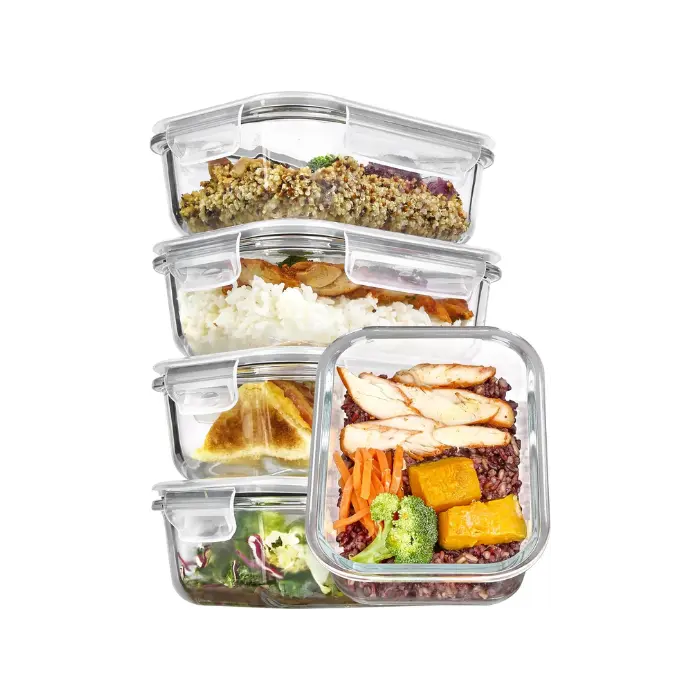
Why this works: At under $24 for 8 containers, this is your entry point. The seal uses a silicone gasket (not plastic lids), and users report zero leaks in the freezer. The 35oz size is perfect for meal prep. Real user feedback: “Great value for the price. Seal is excellent even after a year of heavy use.” 1
Best for: Anyone nervous about committing to glass or testing water before upgrading.
Best Overall Value: Rubbermaid Brilliance Glass 10-Piece Set
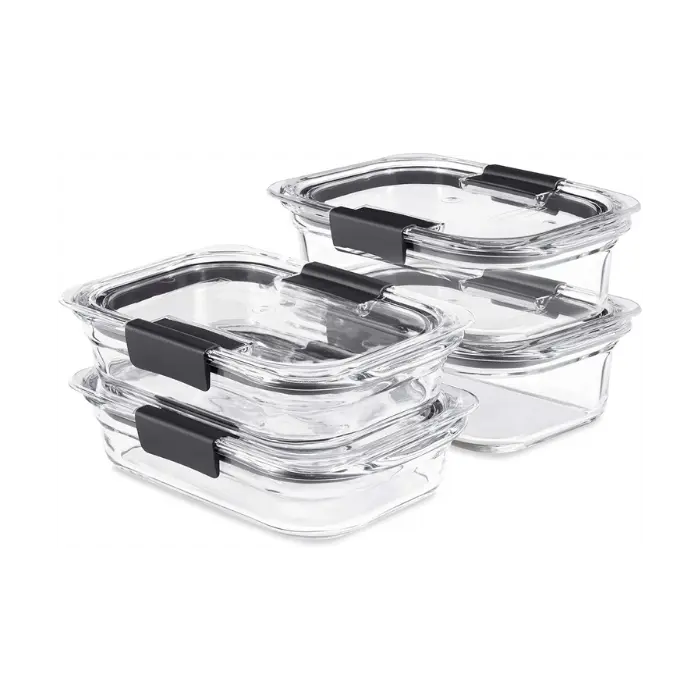
Why this wins: This is the Goldilocks option. You get five containers in different sizes (1.3-cup to 8-cup), and all lids are interchangeable. The StainShield lids resist odors and stains. Oven-safe up to 450°F. Users love the modular system: “I can mix and match sizes, and one broken lid doesn’t force me to replace the whole set.” 2
Cost-per-use: $3.50-4.35 per container. Used daily for five years = $0.0019 per use.
Best for: Families doing meal prep; anyone who wants flexibility without buying 15 different sizes.
Best for Freezing: W&P Porter Silicone Bags (34oz) – 16 Each
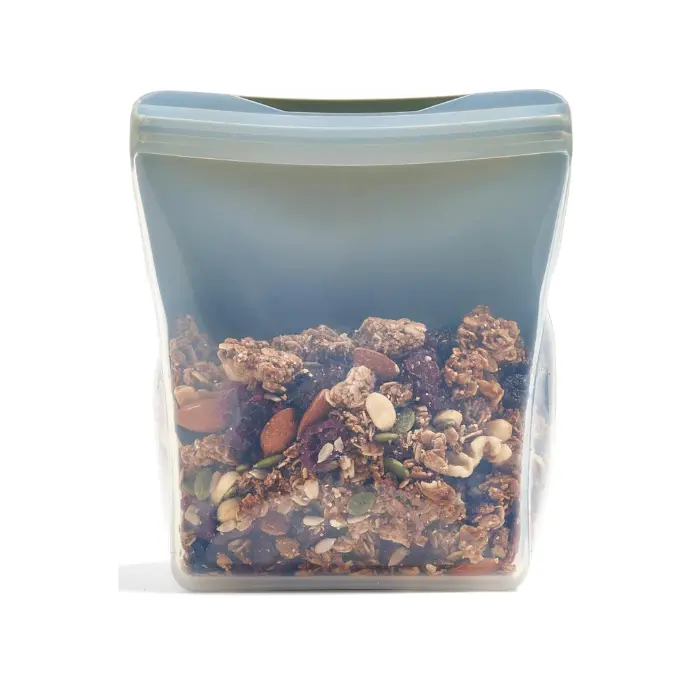
Why Consumer Reports ranked these #1: The thin, food-grade silicone seals airtight better than competitors in the freezer. No frost buildup on frozen food. The flat design fits easily in any door shelf. One owner noted: “I freeze mango, and months later there’s minimal frost. With other bags, it’s an ice brick.” 3
The catch: At $12-16 per bag, you’re paying for durability (lasts 3+ years vs. plastic bags lasting weeks). Get a starter set of 2-3 sizes.
Best for: Freezer meal prep, sous vide cooking, anyone who hates cling wrap.
Best for Meal Preppers: Pyrex Freshlock 6-Piece Glass Set
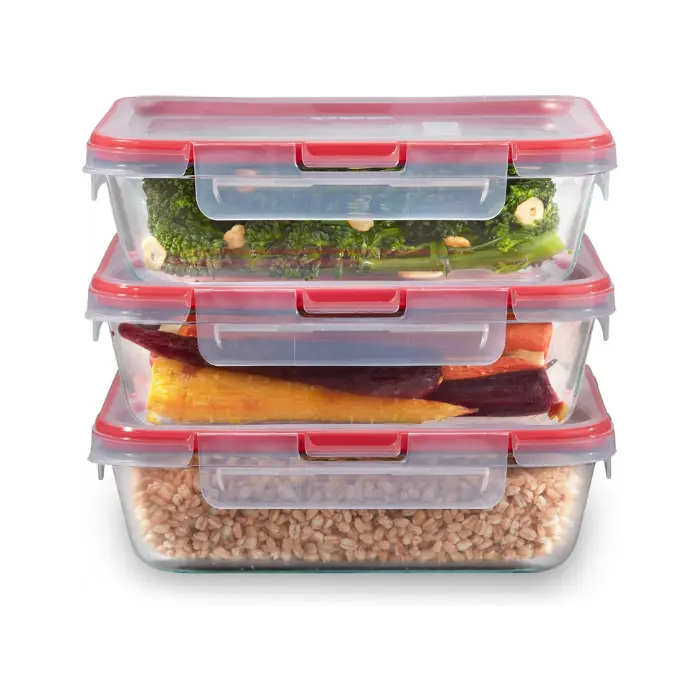
NYT Wirecutter Top Pick | Why: These are the ones food writers reach for. The locking lids feel premium, and the crystal-clear glass means you see exactly what’s inside. Microwave-safe with the lid unlatched (built-in vent prevents splattering). 4
Real-world durability: Users report 7+ years of daily use with zero lid failure.
Best for: Anyone who microwaves leftovers daily and wants lids that don’t become stained mysteries.
Most Sustainable Option: Urban Green Borosilicate Glass w/ Bamboo Lids
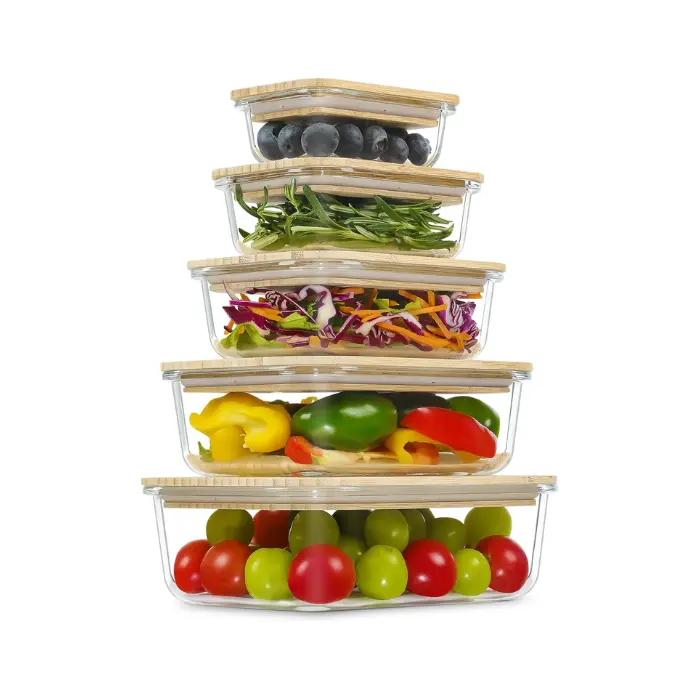
Rating: 4.1★ from 2,031 reviews
The differentiator: This set is 100% plastic-free. Glass containers + bamboo lids + no adhesives. Borosilicate glass is stronger than standard glass and oven-safe to higher temperatures. One buyer said: “I feel good about owning these. They’re durable, and I’m not supporting plastic production.” 5
Price justification: Yes, it costs $10+ more than Rubbermaid. You’re paying for the bamboo, the borosilicate upgrade, and the peace of mind that zero plastic touches your food.
Best for: Eco-conscious buyers, anyone who views storage as kitchen décor, or gifts.
Best Budget-Friendly Metal Alternative: LunchBots Medium Trio II
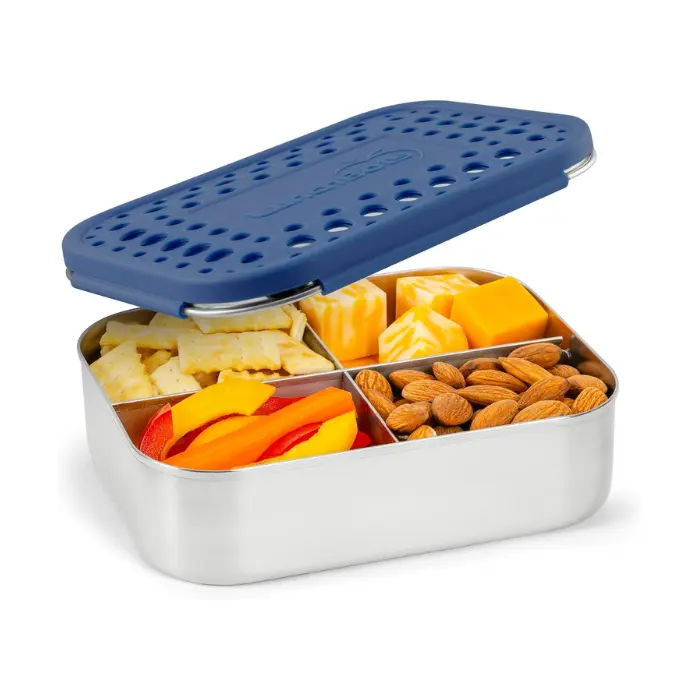
Rating: 4.6★ from 1,200+ reviews
Why this wins: True stainless steel (18/8), completely plastic-free, and affordable. The modular design lets you choose 1-5 compartments based on what you’re packing. Dishwasher-safe, odor-proof, built to last a decade. Verified buyer: “Still perfect after seven years. Zero degradation. Worth every penny.” (#6)
Cost-per-use: $20-26 for a multi-compartment system = long-term value, no plastic involved.
Best for: Meal preppers who want compartments without plastic dividers. Anyone wanting stainless steel durability without premium pricing.
What “Plastic-Free” Actually Means (The Certification Quick-Take)
Here’s where greenwashing hides: Many “non-plastic” containers have plastic lids. That silicone gasket? Still involves a plastic base in some products. Urban Green and LunchBot’s actually deliver on “plastic-free” claims because the entire container—including seals—is glass or stainless steel + food-grade silicone.
What to check: Scroll to the product description on Amazon. Search “plastic” on the page. If it says “plastic lids,” you’re buying hybrid storage. That’s fine—but call it what it is.
Your Action Plan: Week-by-Week
Week 1: Order Vtopmart or Rubbermaid. Test for one week. Notice how food tastes fresher and you stop throwing away leaky containers.
Week 2: Decide: Do you love glass? Add Pyrex next. Do you freeze heavily? Add W&P bags.
Month 1+: Once you’re committed, consider the Urban Green or LunchBot’s upgrade for specific needs (freezing, premium aesthetics, or fully plastic-free).
Expected monthly spend: $25-30 per month to build a complete non-plastic system. After three months, you’re done. Then it’s just replacing wear-tear (rare).
The Bottom Line
You don’t need to spend $100+ on food storage. You don’t need perfection. Pick one of these six, order it this week, and experience the difference. Fresher food. Less waste. No guilt. No stains on your lids in six months.
Ready to make the switch? Start with Vtopmart or Rubbermaid (#2)—both are under $35, ship Prime, and have 4,000+ five-star reviews backing them up.
Have you tried any of these? Which non-plastic storage option is your game-changer? Drop a comment below—I read every one, and I use your feedback to find the next best product to test.
Want Personalized Non-Plastic Product Recommendations?
Join readers getting weekly non-plastic product picks, real Amazon pricing, and budget breakdowns so you can make smart swaps without overspending.
[JOIN THE EMAIL LIST] ← You’ll also get instant access to my Non-Plastic Kitchen Audit Checklist—the exact criteria I use to evaluate products on Amazon so you avoid greenwashing traps.
Next Steps:
Explore my complete guide: [The Zero-Waste Kitchen: 15 Non-Plastic Swaps Under $100] to stack these containers with other sustainable kitchen essentials.


This is a sample comment. Lorem ipsum dolor sit amet, consectetur adipiscing elit. Sed consectetur mollis posuere. Maecenas quis felis sit amet augue dictum molestie. Phasellus tempor nisi sem, id ultrices nibh ultrices id.
Here is another comment! Lorem ipsum dolor sit amet, consectetur adipiscing elit.
This is a nested reply.
Here is a nested reply with more text. Lorem ipsum dolor sit amet, consectetur adipiscing elit. Sed consectetur mollis posuere. Maecenas quis felis sit amet augue dictum molestie. Phasellus tempor nisi sem, id ultrices nibh ultrices id.