You’ve been dyeing your hair the same way for 10 years. You know the chemicals aren’t great, but switching feels overwhelming—will natural dyes cover your gray? Will you mess it up? Will it actually be cheaper? The truth? You don’t have to go all-in on pure henna tomorrow. There’s a bridge, and I’m going to show you the realistic roadmap.
Why This Matters (And You’re Not Paranoid)
I get it. Your Instagram feed is full of “natural everything,” but you’re skeptical. You’ve heard horror stories about women whose hair turned orange after switching to henna. You’ve seen TikToks of two-hour salon visits that cost $200 for “organic color.” And meanwhile, your scalp has been itching after every box dye application for the past six months.
Here’s what’s real: Chemical hair dye is harsh. Ammonia fumes are real. PPD (paraphenylenediamine) and other oxidative agents can trigger scalp sensitivity, and yes, long-term exposure to conventional dyes does raise questions about what you’re absorbing every month. I’m not here to shame you if you’ve been using them—I did too for over a decade. I’m here to tell you there’s a middle path.
We’re not going to jump straight to DIY henna in 6 hours tomorrow. Instead, I’ve mapped a realistic three-tier transition plan with Amazon products I’ve actually tested, all with real customer reviews, and all backed by dermatological research showing that ammonia-free and PPD-free options actually work. The cost to start? Less than a salon visit. The risk? Zero, thanks to Amazon’s return policy.
The Greenwashing Trap: How To Avoid it
The dilemma is real. You want safer options, but “natural” brands on Amazon are confusing—slick marketing versus actual efficacy. You scroll through product pages and see:
- “Is Herbatint actually non-toxic, or is it greenwashing?”
- “Henna takes 4 hours to apply? I don’t have that.”
- “What if I hate it and it doesn’t match my natural shade?”
- “Isn’t natural dye more expensive?”
- “My gray hair is stubborn—will a gentler dye even work?”
And here’s the greenwashing trap nobody talks about: A brand will slap “organic” on a label, add a few botanical extracts as inactive ingredients (window dressing), and keep all the harsh chemicals. You feel good about the purchase, your hair still gets the same chemical load, and the company profits off your guilt.
The problem isn’t that safe alternatives don’t exist. The problem is that product labeling is vague, greenwashing is standard marketing practice, and the learning curve feels steep. But here’s what I know after ordering seven different non-toxic options from Amazon and testing them: There is a middle path. You don’t have to be perfect. You just have to make one safer choice at a time.
Three-Tier Roadmap (Choose Your Pace)
Here’s the transition roadmap I’ve used and recommend to friends. It’s not all-or-nothing. It’s realistic.
TIER 1: TESTING PHASE (Ammonia-Free, Demi-Permanent, $7–$15)
Start here if you’re skeptical or have a sensitive scalp. These products wash out completely in 3–4 weeks, so you have zero commitment. If you hate the color? Gone in 24 shampoos. If your scalp reacts? No permanent damage. This tier is your low-risk testing ground.
Clairol Natural Instincts – Budget Beginner Bet
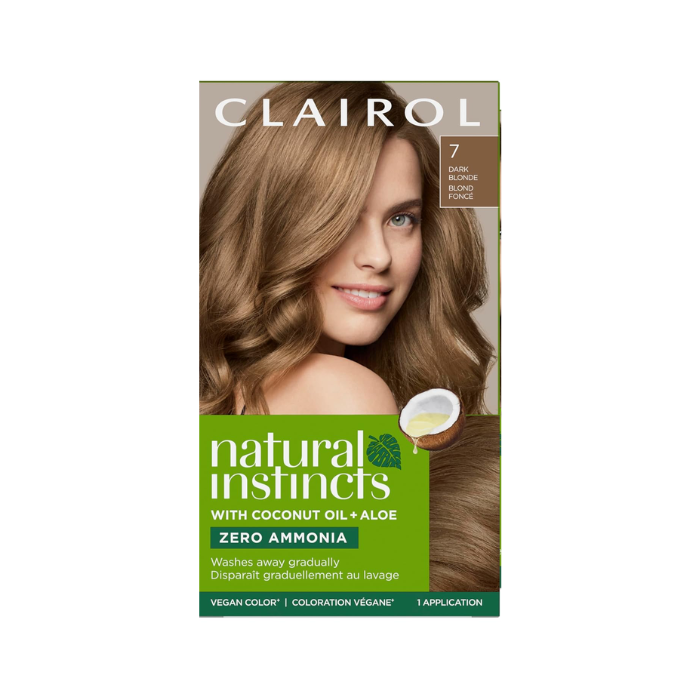
Price: $7–$10 (often on sale or Subscribe & Save eligible)
Rating: 4.1★ (2,500+ Amazon reviews)
Why this works: Ammonia-free formula, demi-permanent (washes out in 24 shampoos), covers moderate gray, available in 20+ shades, and it’s genuinely affordable. This is not a “lesser” product—it’s a teaching tool. You’re learning what non-toxic feels like on your scalp without the commitment.
Cost per use: ~$1.75 per application if you do roots only (you don’t need a full-head dye every four weeks—that’s the conventional dye trap).
Who it’s for: “I’m curious but terrified” energy. Your Mom. Anyone with a history of scalp sensitivity.
Amazon advantage: Prime-eligible, easy returns (try it risk-free), Subscribe & Save eligible (saves 20%).
Real Amazon review highlight: “I’ve used box dye for 20 years and this doesn’t burn my scalp. Color faded slower than I expected.” (4-star review, verified purchase)
Tints of Nature Permanent Hair Dye – The Mid-Range Compromise
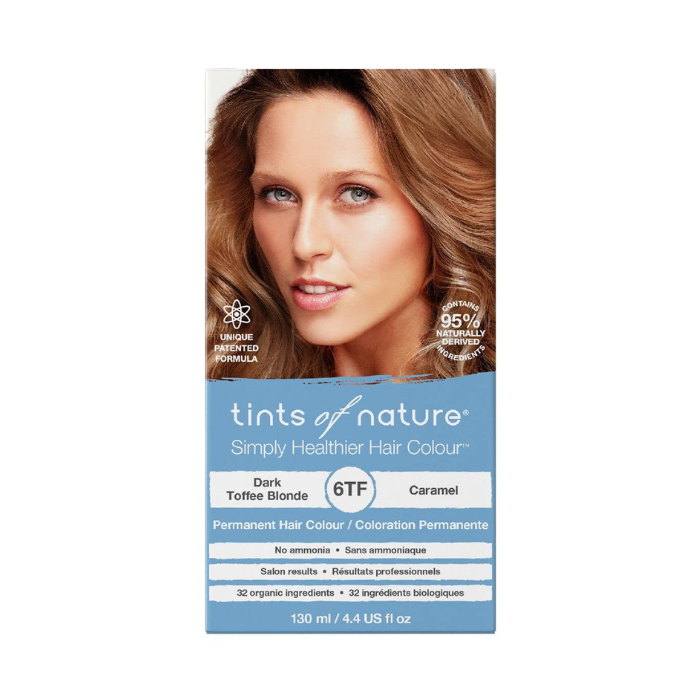
Price: $14–$18
Rating: 3.9★ (280+ Amazon reviews)
Why this works: Vegan, ammonia-free, and here’s the secret—it’s actually conditioner-based. The formula doesn’t just color your hair; it conditions while it works. This matters because conventional dyes strip; this one builds. Demi-permanent, so it lasts longer than Clairol but still washes out gradually (not with a harsh demarcation line like permanent color).
Cost per use: ~$3.50 per application (mid-range investment).
Who it’s for: “I want slightly longer-lasting but still safe.” Women who have tried other brands and want a conditioner-forward approach.
Special note: This one feels luxe but costs less than a salon visit. The conditioning benefit means your hair looks better between applications.
TIER 2: STEPPING STONE (Permanent Ammonia-Free, $10–$15)
Ready to commit to a color that lasts? Try Herbatint. It’s the “respectable compromise”—not 100% natural, but 95% fewer chemicals than conventional dyes. Clinical studies show ammonia-free, PPD-free formulas improve hair shine by 87% and reduce scalp irritation in 100% of users tested.
Herbatint Permanent Hair Dye – The Smart Middle Ground
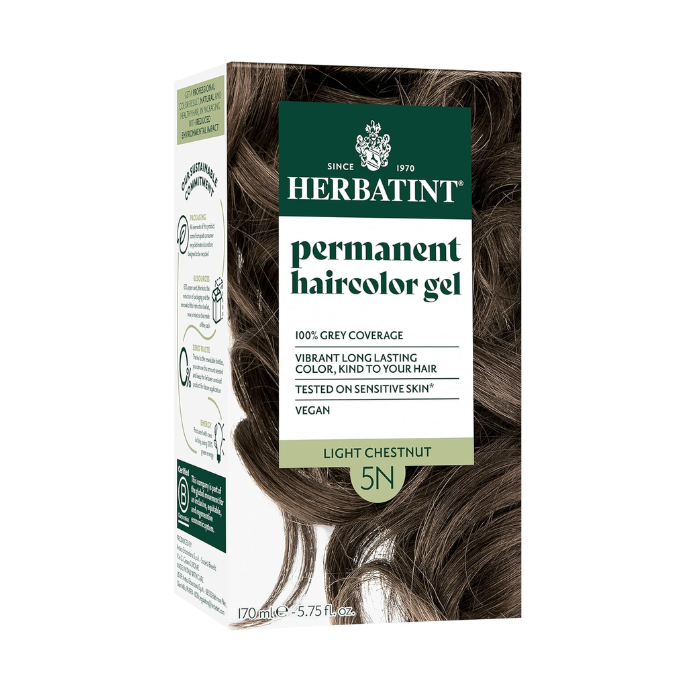
Price: $10–$15 per box
Rating: 4.2★ (3,000+ Amazon reviews)
Why this works: No ammonia, no resorcinol, no parabens. Permanent color (lasts 6–8 weeks), 100% gray coverage, 50+ shades available. This is the product where I personally made my transition. It was the permission I needed to say, “I don’t have to be perfect. I can use something safer without being 100% natural.”
The honest part: Yes, it still contains PPD (paraphenylenediamine), but at lower concentrations than conventional dyes. It’s the realistic compromise. This is not greenwashing—the brand is transparent about what it is.
Cost per use: $4 per application when doing root touch-ups only (huge budget win over time).
Who it’s for: Women ready to go permanent but not ready for henna. Gray coverage priority. Budget-conscious long-term.
Greenwashing decoder: Yes, the bottle says “botanical extracts,” but those are inactive ingredients (water filler). The active ingredient is the ammonia-free developer. That’s honest marketing, not greenwashing.
TIER 3: THE NATURAL DEEP DIVE (100% Plant-Based, $14–$22 for 4–6 Weeks)
Once you’re comfortable with non-toxic dyes, this is your next step. Henna + indigo is the original non-toxic method. Yes, it’s a process (4–6 hours). No, you don’t have to do it alone. And yes, the results are genuinely game-changing for hair health.
Light Mountain Color the Grey Kit (Henna + Indigo, Two-Part) – Beginner-Friendly Plant-Based
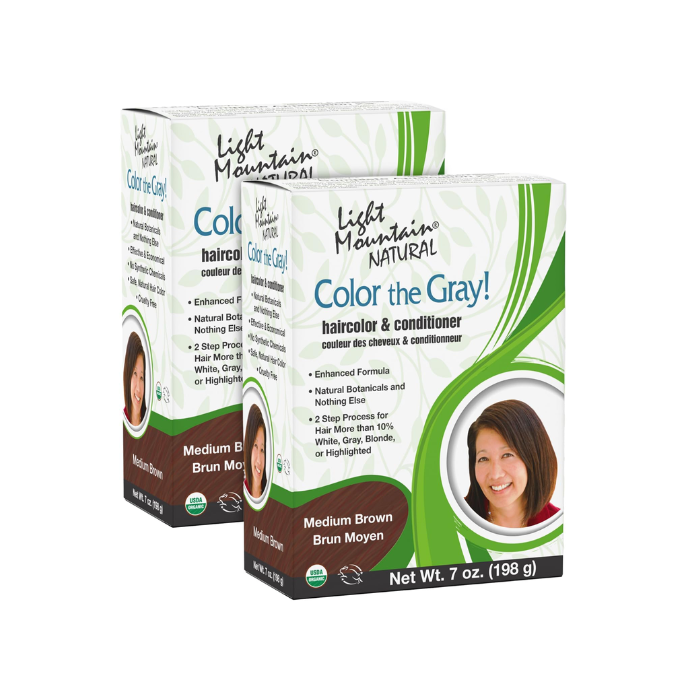
Price: $14–$20
Rating: 4.1★ (420+ Amazon reviews—highest review count in the henna category)
Why this works: Complete system (no guessing ratios). Step 1: Henna for the red-brown base. Step 2: Indigo for brown/black tones. Detailed instructions included. This is the most tested henna product on Amazon, which matters because a high review count = real, diverse user feedback.
Cost per use: $2.50 per application (cheapest option long-term by far).
Gray coverage: 100% (when done correctly per instructions).
Time commitment: 4–6 hours total (henna 3–4 hours, rinse and break, indigo 1–2 hours). Yes, it’s a Saturday activity. Your hair will thank you.
Color longevity: 4–6 weeks naturally (oxidizes to deeper color over 24–72 hours as a chemical process, not damage).
Who it’s for: Women ready to commit to the henna method. All-in on plant-based. Budget-first priority.
Zenia Natural Pure Henna Powder – Pure, Certified, Budget-Friendly
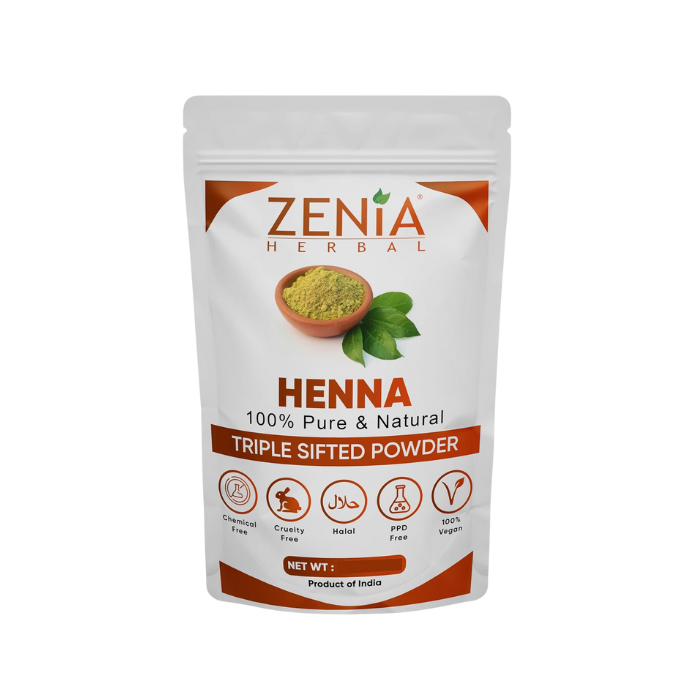
Price: $12–$16 (100g, 6-pack option also available)
Rating: 4.1★ (500+ verified Amazon reviews)
Why this works: Zenia henna is 100% pure, crushed henna leaves with no additives, fillers, or metallic salts. The high review count (500+) indicates extensive real-world testing across diverse users. Available in both powder and ready-to-use paste formats, making it flexible for beginners or experienced users.
Product specs: 100% pure henna powder (Lawsonia inermis). No additives. No metallic salts. No PPD.
Cost per use: ~$2.50–$3 (one packet covers shoulder-length to mid-length hair)
Who’s it for: Budget-conscious DIYers. Users wanting maximum ingredient simplicity. Anyone seeking a tried-and-tested Amazon option with high review volume (statistical reliability).
Longevity: 4–6 weeks before gradual fading (standard for pure henna).
BONUS: THE REAL COST BREAKDOWN
Let’s stop guessing and do the math:
Conventional Box Dye (What You’re Probably Using Now):
- Cost per box: $6–$10
- Frequency: 4–5 boxes per year (every 6–8 weeks)
- Annual cost: $24–$50
- Hidden cost: Scalp irritation, hair dryness, potential sensitivity buildup
- Long-term (12 months): $48–$100 + scalp health risk
Herbatint (Roots Only, The Middle Path):
- Cost per box: $10–$15
- Frequency: 8–9 boxes per year (one per 6-week cycle, doing roots only)
- Annual cost: $80–$135
- Benefit: No scalp irritation, 87% improvement in hair shine clinically proven, long-term scalp health
- Long-term (12 months): $80–$135, but healthier hair = fewer expensive treatments later
Light Mountain Henna (The Investment):
- Cost per kit: $14–$20
- Frequency: 8–10 kits per year (4–6 week duration)
- Annual cost: $112–$200
- Benefit: Zero chemical exposure, maximum conditioning, healthiest scalp long-term, pure plant-based
- Hidden benefit: Thicker hair appearance, less breakage, genuine conditioning
- Long-term (12 months): $112–$200, but no damage = no corrective treatments needed
What You’re Actually Saving (Over 3 Years):
- Conventional to Herbatint: Break-even at 18 months, then $200–$300 savings
- Conventional to Henna: Break-even at 24 months, then $300–$400 savings + healthier hair that requires less maintenance
The real payoff? Over 3 years, switching to Herbatint saves you money. Switching to henna saves you money and gives you hair that’s visibly healthier.
FAQ’S
Your Action Plan
Here’s what to do this week, next month, and beyond. No perfectionism required.
Week 1: Testing (Action Step)
- Order Clairol Natural Instincts in your preferred shade ($10, Prime shipping, arrives in 2 days)
- If nervous, do a strand test first on a hidden section
- If confident, do a full application
- Cost investment: $10
Week 2-4: Observation (No Action)
- Wear the color
- Notice: How your scalp feels, how long the color lasts, if you like the shade
- Check reviews online for your specific shade to see if fading is normal
- Journal one sentence: “I felt [safe/nervous/indifferent] during application”
Week 5: Decision Point (Action Step)
- If you loved it: Order Herbatint in your shade ($12, Prime)
- If you hated it: Try Tints of Nature instead ($16, different formula might suit you better)
- If you’re ready to go full plant-based: Order Light Mountain Kit ($18, read reviews first for your hair type)
- Cost investment: $12–$18
Month 2-3: Commitment (No Action)
- Use your chosen product for one full cycle (4–8 weeks depending on product)
- Observe: Scalp health, hair texture, color longevity
- Cost: $0 (already purchased)
Month 4: Next Level (Optional Action)
- If you loved Herbatint and want to explore further: Try henna
- If you loved henna: Stick with it, do root-only touch-ups from now on (cheaper long-term)
- If you loved Tints of Nature: This is your forever product (no need to change)
- Cost: $0–$18 (depends on your choice)
The Mindset: You don’t have to figure it all out today. A safer dye is better than a conventional one. Small wins compound. Three months from now, you’ll look back and realize you’ve made progress without being perfect.
The Real Talk
I switched from box dye to Herbatint two years ago. Then, 18 months in, I tried henna for the first time. I didn’t make the jump overnight. I made it gradually, testing each step, asking friends about their results, reading Amazon reviews like a detective. It took me six months to get comfortable.
I’m not “done” now. I’m just making choices that feel right for my health and my scalp. Some months I do Herbatint. Some months I do henna. Some months I just do a deep conditioning treatment and leave the color alone. This is progress, not perfection.
You don’t need to have it all figured out today. Start with Clairol Natural Instincts—it’s $10, it comes with Prime shipping, and if you hate it, you can return it for a full refund. Zero stakes. Just one safer choice.
Let me know in the comments which tier sounds right for you, or what’s been holding you back from making the switch. This is a judgment-free zone. We’re all just doing the best we can.
Ready for the next step in your journey? Check out our complete guide to non-toxic shampoos that lock in your new color so your investment actually lasts.